
HVAC Modernization
The average building wastes 30% of the energy it consumes because of inefficiencies.
Common Building Challenges
Design
Some buildings are over engineered, Which can result in higher energy consumption and unnecessary waste.
Occupancy
Buildings are designed to meet 100% occupancy, and without building sensors, energy is wasted.
Drift
Over time HVAC Systems can drift out of alignment, resulting in excessive energy use and reduced occupant comfort.
Control
Buildings without periodic oversight and controls often lose track of proper schedules and setpoints.
Aging Systems
Older HVAC equipment often leads to higher maintenance costs, reduced reliability, and lower efficiency.
Increased Costs
Inefficient operation and aging equipment can drive up energy and maintenance expenses.I
Visibility
Limited system visibility makes it difficult to identify performance issues and energy savings opportunities.
Control
Outdated controls can lead to unnecessary runtime, inconsistent temperature, and wasted energy.
HVAC Modernization
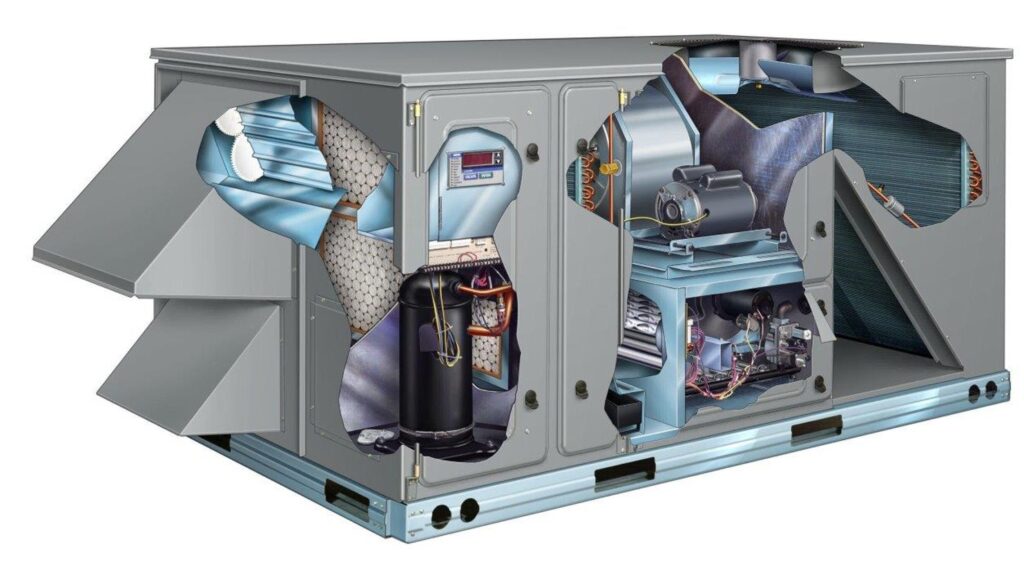
Advanced Rooftop Controls
- Variable Speed Fan Control
- Intelligent Compressor Modulation
- Demand Control Ventilation
- Economizer & Free Cooling Optimization
- Peak Demand Reduction
Our HVAC modernization solutions support both retrofit and replacement applications, helping reduce HVAC energy consumption and peak demand by up to 50%. Advanced controls, sensors, and equipment upgrades continuously optimize airflow, cooling capacity, and ventilation to match real-time building demand while improving comfort and equipment reliability.
Intelligent HVAC Load Matching
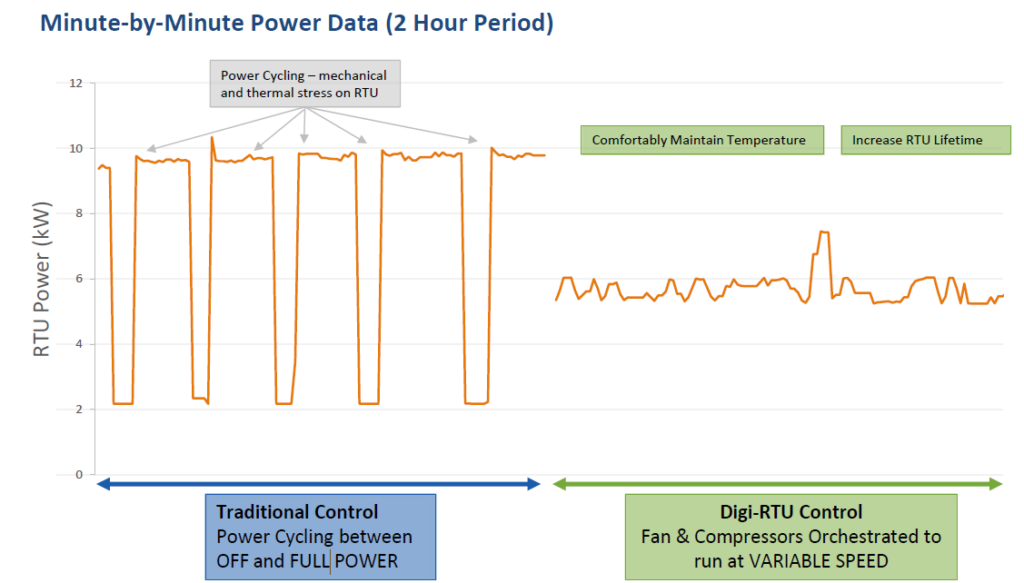
Fan & Compressor Coordination
- Eliminates energy-wasting compressor cycling by continuously matching cooling output to building demand.
- Modulates fan and compressor operation to maintain comfort using only the energy required at that moment.
- Reduces peak electrical demand by lowering startup surges and smoothing HVAC power consumption.
- Integrates economizer and ventilation strategies to maximize free cooling and reduce unnecessary mechanical cooling.
- Delivers real-time load matching that improves comfort, humidity control, and overall system efficiency.
Traditional rooftop units cycle compressors between full power and off, creating energy waste, demand spikes, and unnecessary equipment wear. Intelligent load matching transforms rooftop units into variable-capacity systems that continuously adjust airflow and cooling output to actual building conditions. The result is lower energy consumption, reduced peak demand, improved comfort, and less stress on compressors, belts, motors, and electrical components. Compressor cycling can be reduced by up to 70%, helping extend equipment life and lower maintenance costs.
Key Benefits
Energy Savings
Reduce HVAC energy consumption by 30-50%.
Peak Demand Reduction
Support demand management and utility programs through intelligent load control.
Improved Comfort
Maintain more consistent temperature and humidity conditions.
Sustainability Impact
Reduce energy consumption and support corporate sustainability goals.
Reduced Operating Costs
Reduce Maintenance and reactive repair costs.
Extend equipment life
Extend expensive replacement costs by 5 years or more.
Ideal for
- Restaurants
- Retail
- Office Buildings
- Convenience Stores
- Schools
- Churches
- Healthcare
- Demand Management
- Light Industrial
- Manufacturing
- Health Clubs
- Grocery